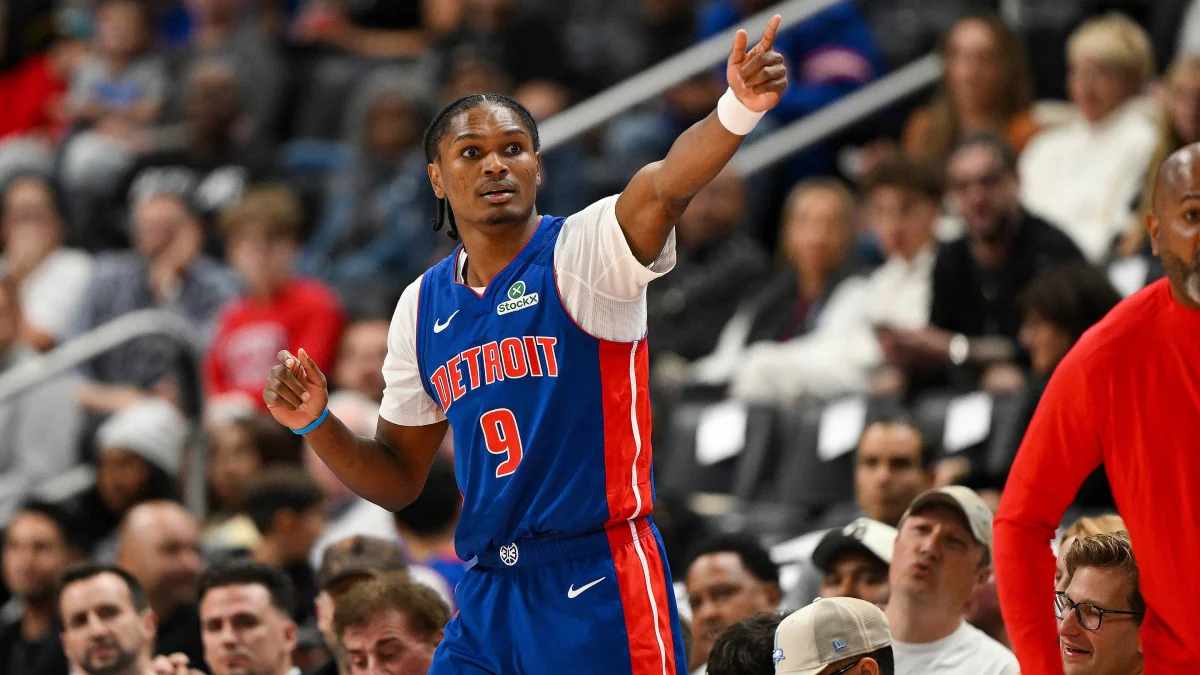
Kevin Huerter's Minutes Are Testing Bickerstaff's Patience
- Cargo
- NHL Games & Standings
- Shipped
- Shipper
- Cem Yolbulan
- Readers
- 763
Detroit is winning with a deep rotation, yet Kevin Huerter keeps logging bench minutes while his shot stays cold. The case for a change is getting louder.

The Pistons are winning, and they're doing it with depth. After beating three title hopefuls in less than a week, Detroit has every reason to believe it can claim a top seed in the East and make a serious postseason run. That's the good news. The uncomfortable part is who keeps taking up rotation minutes while the team rides that momentum.

A deep rotation is working, but not every spot is earning its minutes
Head coach JB Bickerstaff is running the rotation the way he prefers: plenty of bodies, plenty of effort, and nobody getting comfortable. In a long season, that approach has real merit, especially when players buy in on both ends. The trouble is Bickerstaff's habit of leaning on veterans past the point where their production justifies it. Last season that player was Caris LeVert, a coach who just couldn't quit him. This season, it's Kevin Huerter.
The contract makes the minutes harder to explain
It's difficult to understand why the front office and coaching staff are so attached to Huerter. The 28-year-old shooting guard wasn't particularly effective after joining Detroit last season, converting only 29.4% of his threes. Still, he received a three-year, $27 million extension, well above what some of his counterparts got on the market. When a team commits that kind of money, the player's role tends to be protected, and that's where the problem starts. Reputation and a guaranteed salary can keep someone in the rotation long after the on-court evidence has faded. Coaches in this spot often feel they owe the player a longer look, and that instinct can cost a team in a tight playoff race.
What the numbers say right now
His shot still isn't falling, and the impact fans were hoping for hasn't shown up. Huerter is shooting 35% from the field and 25% from three, averaging 5.7 points, 2.0 assists and 1.3 turnovers in 21.3 minutes per game. He has yet to attempt a free throw this season. For an offense-first player who is also a defensive liability, those figures aren't close to enough.
Sunday against the Sixers made the usage harder to justify. Huerter logged 26 minutes, the most of any Pistons bench player in that game. That's a big workload for someone whose scoring hasn't moved the needle.
The on-off splits add another layer. With Huerter on the floor, Detroit is -3 for the season. With him on the bench, the Pistons have outscored opponents by 41 points. Those are small samples, and plus-minus can swing wildly over a few weeks. Still, when a rotation player's minutes and his team's results point in opposite directions, a coach has to take notice.
This is a pattern, not a slump
Here's the thing: this isn't simply a cold start. Huerter hasn't been a high-level rotation player in several seasons, and he hasn't shot above the league-average percentage from three since the 2022-23 season. A player can recover from a rough stretch, but a multi-year drop in efficiency usually means the job needs to be earned on different terms. Hoping the shots start falling is a reasonable thing to believe in, but it's a thin foundation for heavy minutes.
Why Bickerstaff keeps playing him
Bickerstaff clearly trusts Huerter. Perhaps he believes the 28-year-old can turn things around and start hitting shots. There's also a practical reason for the extra run. The injuries to Ausar Thompson and Isaiah Joe have thinned the wing options, so Huerter is likely to keep getting opportunities. Injuries can make a coach reach for experience, and that's a fair explanation. It just doesn't answer whether the minutes are producing results.
Time to shorten the leash
That said, the patience window looks like it's closing. Ebuka Okorie and Chaz Lanier are waiting on the sidelines for their chance. Unless Huerter starts making a real impact soon, Bickerstaff should seriously consider giving Okorie and Lanier meaningful minutes. A contender with a deep roster can afford to find out what its bench players can do, and a few extended looks would answer questions that Huerter's current numbers can't.
Three things are worth watching. First, whether Bickerstaff actually shifts minutes toward Okorie or Lanier. Second, whether Huerter's three-point shooting recovers to anything near league average. Third, how the rotation looks once Thompson and Joe are available again. If Detroit wants to be the top seed it's chasing, the bench spots need to be earned by production, not reputation.