Duncan Robinson's Hot Shooting Is Hiding a Pistons Offense Problem
- Cargo
- Analysis & Opinion
- Shipped
- Shipper
- Cem Yolbulan
- Readers
- 829
Duncan Robinson's elite shooting has Detroit's offense looking better than it is. The Pistons have dropped to 16th in offensive efficiency, and regression could expose the gap.
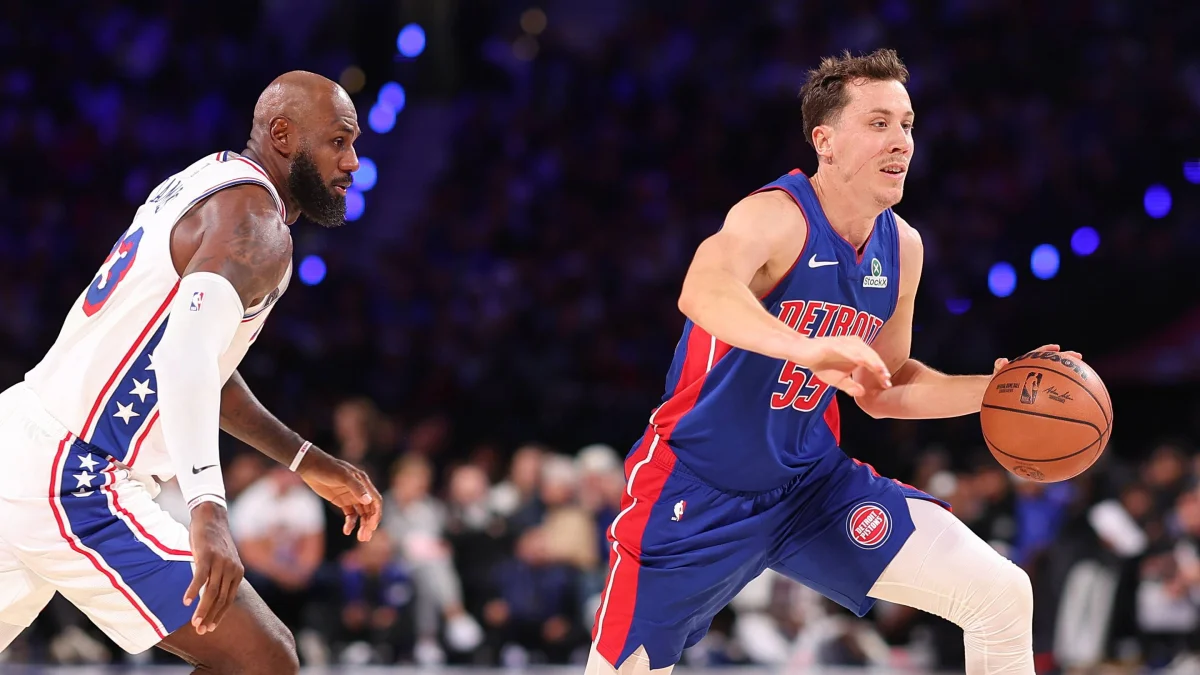
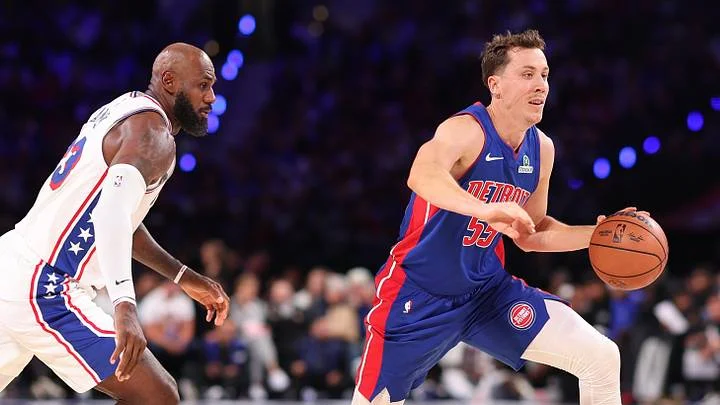
Duncan Robinson is shooting the lights out, and that's exactly the problem. The Pistons' offense looks healthier than it is, and most of the cover is coming from one player's jump shot.
The numbers that flatter the team
Robinson is averaging 19 points per game on 69.7% True Shooting, one of the most efficient marks in the league. He's making 47.9% of his threes on 9.1 attempts a night. Only Luka Dončić and Stephen Curry are making more threes per game than Robinson, and Robinson is hitting at a higher percentage than both superstars. That's elite company by any measure.
Here's the thing: when one shooter gets this hot, team-level numbers absorb the heat. Detroit ranks in the top half of the league in three-point makes and three-point percentage this season, which reads like a healthy shooting profile. The efficiency number tells a different story. Last season the Pistons were the tenth-ranked offense at 118.3 points per 100 possessions. This year they're scoring 114 per 100, good for 16th in the NBA according to Cleaning the Glass.
That gap is the whole argument. A team that drops from the top half to the bottom third in offensive efficiency while its three-point shooting improves has a problem somewhere other than perimeter volume. Robinson's makes are filling the box score, but they aren't fixing what's broken in the half-court.
Why regression is the real threat
Robinson has long been one of the NBA's best shooters, so this hot start isn't pure fluke. Still, a 47.9% clip on that many attempts is hard to sustain even for him. High-volume shooters tend to drift back toward their established baselines over a long enough sample, and a stretch like this one usually isn't permanent.
My read is that the Pistons are leaning on a cushion they can't count on. If Robinson were shooting his normal percentages, Detroit's offense would rank a couple of spots lower than it does now. That's not a crisis yet, but it's a sign of how much weight one shooter is carrying. When the shots stop falling, the team won't have a second source of efficient offense to replace the lost points.
Regular-season wins versus playoff offense
Detroit's defense is the reason the record looks the way it does. The analysis behind this piece argues the Pistons have the best defense in the league by a wide margin, and that's the engine that keeps them winning games when the offense sputters. That's a strong foundation, and it's why this team has real standing in the conference.
The postseason asks different questions. Playoff rotations tighten, minutes concentrate among the best players, and defenses load up on the most dangerous shooter. When that happens, the other four players on the floor have to create their own offense. For Detroit, that's where the roster's construction starts to matter. A defense-first team can survive a night without offense in April. It can't survive a series of them.
The personnel and scheme gaps
The offseason focus was obvious: after a second-round exit, the Pistons needed more offensive punch to be taken seriously as title contenders. The front office stopped short of blockbuster moves and instead prioritized adding shooting, hoping to lift the offense without giving up the core that built the defense.
Jalen Duren's return will help, and Isaiah Joe should add offense once he's back in the lineup. But the deeper issues remain. Detroit still lacks enough shot creation and enough shooting around its primary options. The rotation still carries too many non-shooters and players who don't threaten a defense when they catch the ball. No amount of Robinson makes can paper over a lineup where opponents can sag off four of five players.
That's the schematic side of the problem. Spacing has to be built on purpose, with shooters who can punish a defense that helps, and with ball handlers who can turn a closeout into a clean look. When too many spots in the rotation don't meet that bar, the coach has fewer options for generating good shots, and the team leans harder on whoever is hot that night.
What to watch next
Three things will tell us whether this offense is turning around or just holding its breath. First, watch Robinson's percentages as the sample grows. If they settle toward his career norms, the offensive rating will show how much of the lift was real. Second, track how Detroit's shot profile changes with Duren and Joe back. A better shot-creation mix would be the clearest sign that the team has solved its own problem rather than hiding it. Third, look at the minutes given to non-shooters in the rotation. Every minute spent with a player the defense can ignore makes the offense harder to run.
The Pistons don't need Robinson to shoot at this level every night. They need the rest of the lineup to give him the kind of space that makes his shooting sustainable. Until that happens, Detroit's offense will keep looking better on the stat sheet than it plays on the floor.