Matthew Schaefer's Minutes and Metrics Already Look Like a Norris Case
- Cargo
- NHL Games & Standings
- Shipped
- Shipper
- Nate Duffett
- Readers
- 437
At 19, Matthew Schaefer is logging 25:26 a night with elite possession numbers. Top-five Norris consideration looks realistic, but first place is a bigger leap.
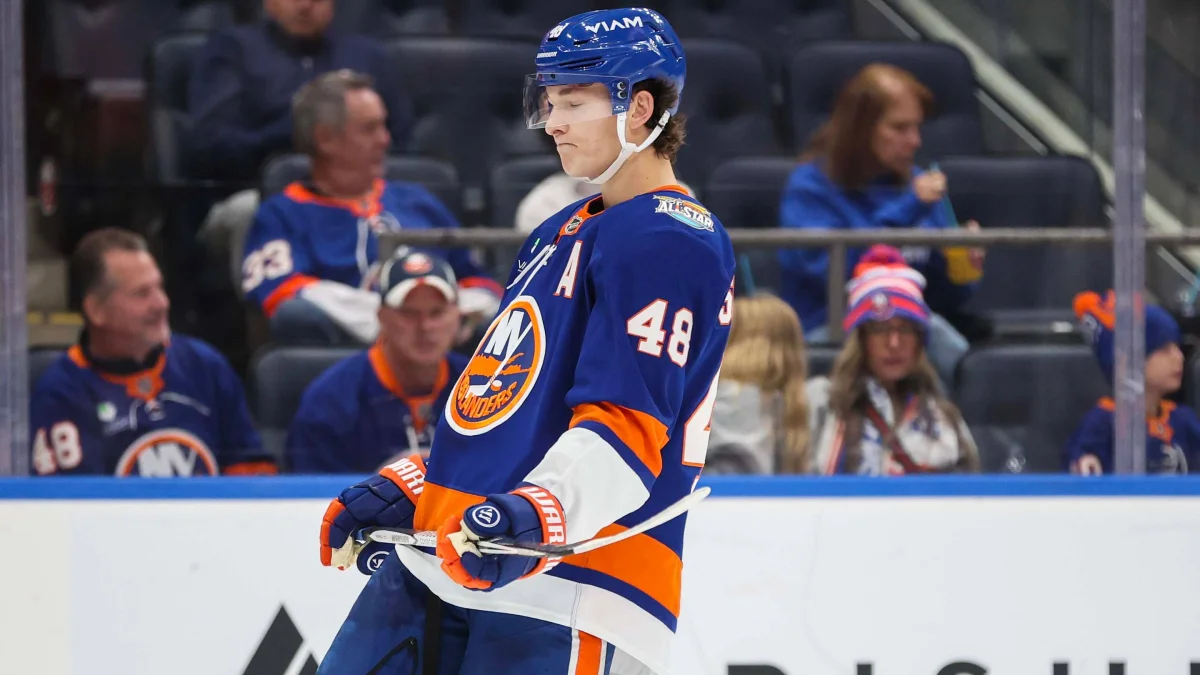
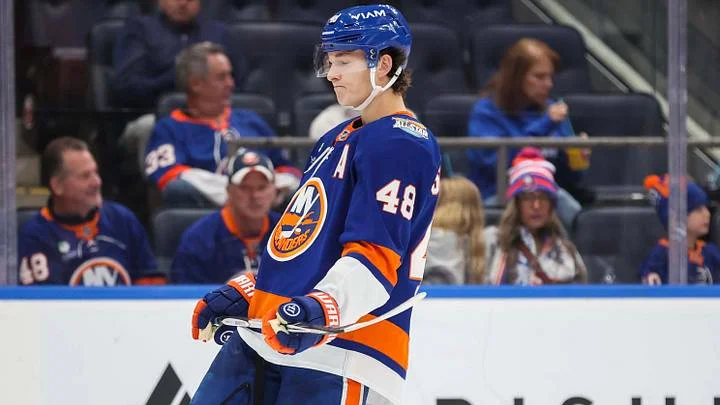
The best defensemen in the NHL share a trait that never shows up in the box score. It isn't the goals or assists, the rushes stopped at the blue line, or the forwards laid out along the boards. Every Norris Trophy race features a different style, but the contenders have one thing in common: they make the game look slower for their team. Matthew Schaefer is starting to do exactly that, and at 19 he's doing it earlier than most people expected.
Why the minutes tell the story
Here's the thing about ice time: it's a coach's vote of confidence, and it's usually the first number to reveal how a defenseman is viewed inside his own building. Schaefer averages 25:26 per game. That's not a number that sounds dramatic until you line it up with the top of the position. Zach Werenski is at 29:34 and Quinn Hughes is at 26:41. Cale Makar, normally one of the league's biggest minutes-eaters, has been scaled back to 21:29 by the Avalanche this season to keep him fresh.
Schaefer's total isn't a rest-day number, and calling it "only" 25 minutes is a stretch. Still, the gap to Werenski is the one that matters for the Norris conversation. Werenski's workload is the benchmark voters and coaches tend to associate with a true No. 1 defenseman, and Schaefer is still climbing toward it.
The penalty kill is the missing piece
Schaefer's biggest limitation right now is shorthanded time. He mostly gets used at the tail end of a kill, usually when a late faceoff leaves the Islanders needing a fresh body. Coach Lane Lane DeBoer wants him on the five-on-five shift, which is a sensible choice for a teenager whose offensive value is so tied to puck possession and transition.
That's also where the path to a bigger role is clearest. Quinn Hughes sits at 26:41 without making penalty killing a core part of his usage, which gives Schaefer a realistic target if the Islanders keep his minutes in the five-on-five range. If DeBoer ever decides to put him on the kill regularly, the ceiling moves toward Werenski's total. Teams usually add shorthanded minutes gradually, and they tend to do it once a young defenseman has shown he won't get lost in his own zone. That looks like the trust-building phase Schaefer is in now.
What the numbers say about his game
The eye test is the reason most fans are talking about him, but the underlying numbers back it up. Schaefer owns a 54.9% expected goals share (xGF%) and a 58.4% shot share (SF%) while he's on the ice. He's also creating 3.52 expected goals for per 60 minutes. Expected goals for percentage measures how much of the scoring chance quality a team generates relative to what it allows, and a share above 50% means the Islanders are controlling play with him out there. Shot share tells a similar story about volume. Put together, those figures would place him near the top of the league's defensemen, and that's the kind of profile coaches want to build around.
The important caveat is sample size. Advanced metrics for a 19-year-old in his second season can swing with linemates, zone starts and matchups, so the trend matters more than any single snapshot. The encouraging part is that the numbers have stayed strong while his deployment has grown, which suggests the results come from his game rather than from a soft role.
Where the Norris case stands
Schaefer won the Calder Trophy unanimously last season, and he finished 12th in the Norris Trophy race while earning eight top-five placements. That's a strong debut for a rookie defenseman, but it also shows the gap he has to close. Winning the Norris in his second season would be an outlier outcome, and that isn't what most observers are predicting.
The more realistic read is that a top-five finish is well within reach. From there, the question becomes how quickly his usage catches up with his results. Players at his age often make their biggest jumps when they take on more minutes and more situational responsibility, and that's the development curve to watch. If his 20-year-old season brings a few more minutes and a more reliable role on the kill, a top-three finish stops looking like a stretch and starts looking like a logical next step.
For Islanders fans, the thing to track isn't just his point total. Watch whether DeBoer's minutes creep upward, whether the penalty kill usage grows, and whether those possession numbers hold as the competition gets tougher. Those three markers will tell you more about Schaefer's Norris trajectory than any single award ballot ever could.