Islanders Fifth-Rounder Vladimir Dravecky Is Already Drawing Top-Four Talk
- Cargo
- NHL Games & Standings
- Shipped
- Shipper
- Jiggs Westfall
- Readers
- 764
Guelph's Ron Davison says Islanders fifth-rounder Vladimir Dravecky can handle top-pairing minutes and run a power play. Here's why that matters.
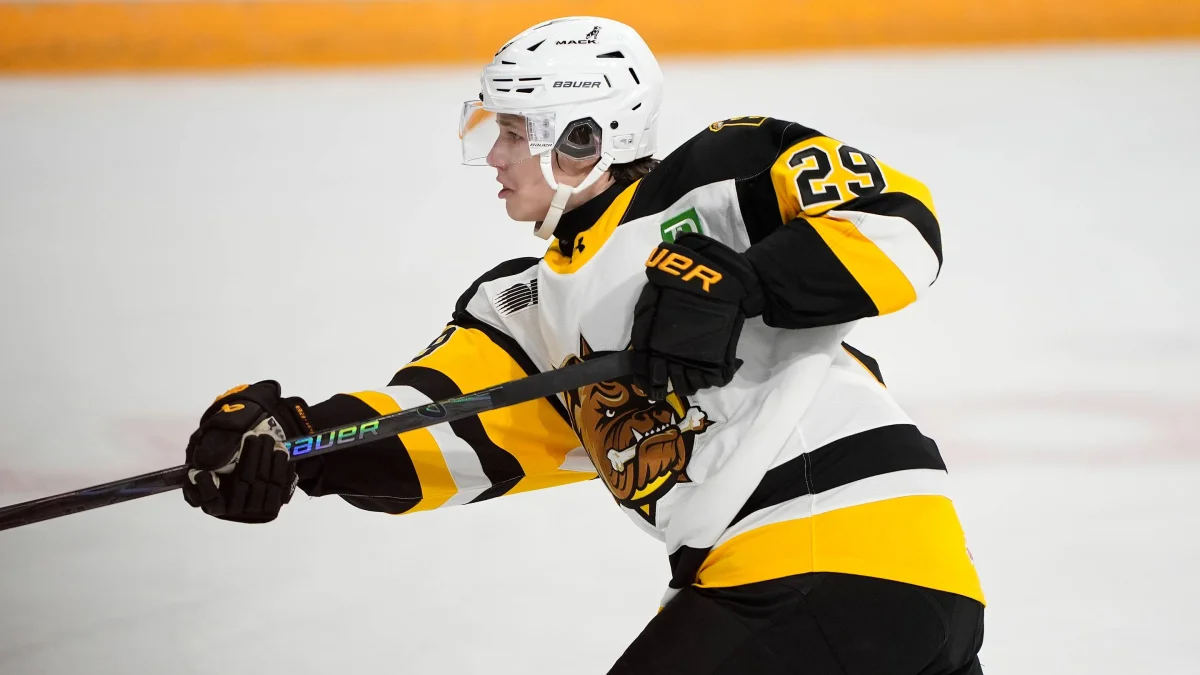
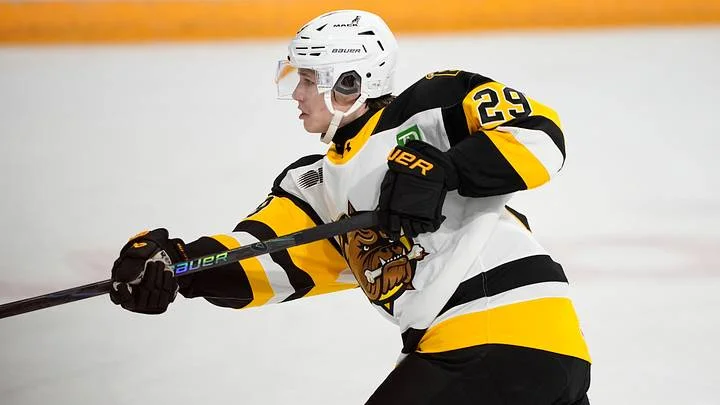
Fifth-round picks rarely come with this kind of praise attached. When Guelph Storm associate coach Ron Davison talks about Vladimir Dravecky, he isn't describing a depth defenseman who might someday grab a bottom-pair job. He's describing a player who could handle top-pairing minutes and quarterback a power play.
Davison is a former Islanders defenseman, so he knows what the organization looks for on the blue line. In a Q&A with Chris Botta of IslesFix, he laid out a case that should get Long Island's attention. You can read the full Q&A at IslesFix.
Why the ice time is the headline
Here's the thing about a 23-to-24-minute role in the OHL: it isn't handed out as a courtesy. Dravecky is already getting that workload in Guelph, and he's working on the power play, killing penalties and taking on most of the situations the Storm throw at him. Coaches don't usually trust a young defenseman with that combination unless he has shown he can absorb it.
That's what makes Davison's read on his future so pointed. "I don't see any reason, if he continues to emerge, why he can't play in one of your top-two pairings," Davison said. "He'll be able to run a power play and he'll be able to take regular shifts." That's a coach who watches his player every day, not a scout working from a draft profile.
For a prospect taken in the fifth round, this is the type of assessment that changes how a development staff plans. A player who can log heavy minutes at junior level gives an organization options. He can be developed in a bigger role without being rushed, and his usage in Guelph shows what he's already capable of doing under pressure.
The offensive driver behind the praise
Davison's comparison is the part that will get the most attention. He was careful about it: "I'm not comparing him to Quinn Hughes, but what he does for us in the OHL is what Quinn Hughes does in the NHL, where he can be a one-man breakout machine," Davison explained.
That's a specific skill, and it's worth separating from the general enthusiasm. Plenty of defensemen move the puck well. Far fewer can take control in their own zone, carry the puck through pressure and create offense without a lot of help. Davison sees that quality in Dravecky, and the early production backs it up. The OHL's own account of his play noted a fourth goal of the season and seven points over his last two games as of October 15, 2026.
Production in junior hockey can be streaky, and one hot stretch doesn't make a prospect. What matters more is whether the offense comes from repeatable control with the puck, and Davison is describing exactly that.
The work that's still ahead
Davison didn't pretend the gaps are gone. Dravecky needs to get stronger, tighten his defensive positioning and learn to handle bigger opponents. Those are the three areas that usually decide whether an offensive defenseman can survive at the NHL level, where the speed and physicality are a step beyond what the OHL offers.
The good news is that the work is already underway. Davison and former Rangers defenseman Dan Girardi are working closely with him on those details. A prospect getting detailed, daily coaching on his defensive habits is in a far better spot than one who has to figure out his own game in a crowded lineup.
Typically, the defensive piece is the one that takes the longest. Strength can be built with a training program, but reading plays and choosing the right gap in a shift takes repetition in games. That's why the time Dravecky spends in meaningful minutes matters so much right now.
The habits that stand out
Perhaps the most encouraging takeaway has nothing to do with his skill. Davison says Dravecky constantly asks for extra ice time, works relentlessly and barely acknowledged signing his Islanders contract before getting back to business. Coaches often say that about players who are hungry, but it's rarer to hear that a player shrugged off a professional milestone to keep working.
That same drive creates a different problem. "We have to slow him down a bit because he'll be exhausted by the weekend," Davison said. "I'm sure the Islanders saw that too in training camp. He's been a pleasure to work with so far. In junior hockey, the sky's the limit for him." Managing a player who wants every rep is a good problem, but it's one that a development staff has to solve with discipline, not just encouragement.
My read is that this combination of workload, offensive instincts and work ethic is what gives Davison's comments weight. He isn't just praising a fifth-rounder for showing up. He's pointing to a player whose coach already sees a path toward the top four.
What to watch next
For a fifth-round pick, that's exactly what you want to hear. There's still a long way to go before Dravecky becomes an NHL regular, and development timelines for defensemen can stretch for years. But the early signs are strong enough that Islanders fans should keep an eye on his minutes, his power-play usage and how he handles the defensive details Davison flagged. If he keeps filling a top-four role in Guelph, the questions will shift from whether he can handle the job to how quickly he can do it against men. That's a much better problem to have than the one most fifth-round picks face.