Vamos Gatos Night Is a Start, But Panthers Hispanic Outreach Needs More Ice Time
- Cargo
- NHL Games & Standings
- Shipped
- Shipper
- Daria Mironova
- Readers
- 473
Vamos Gatos Night on October 15 is a strong celebration, but the Panthers' LATAM Cup work points to a bigger question about how Hispanic families get into hockey.
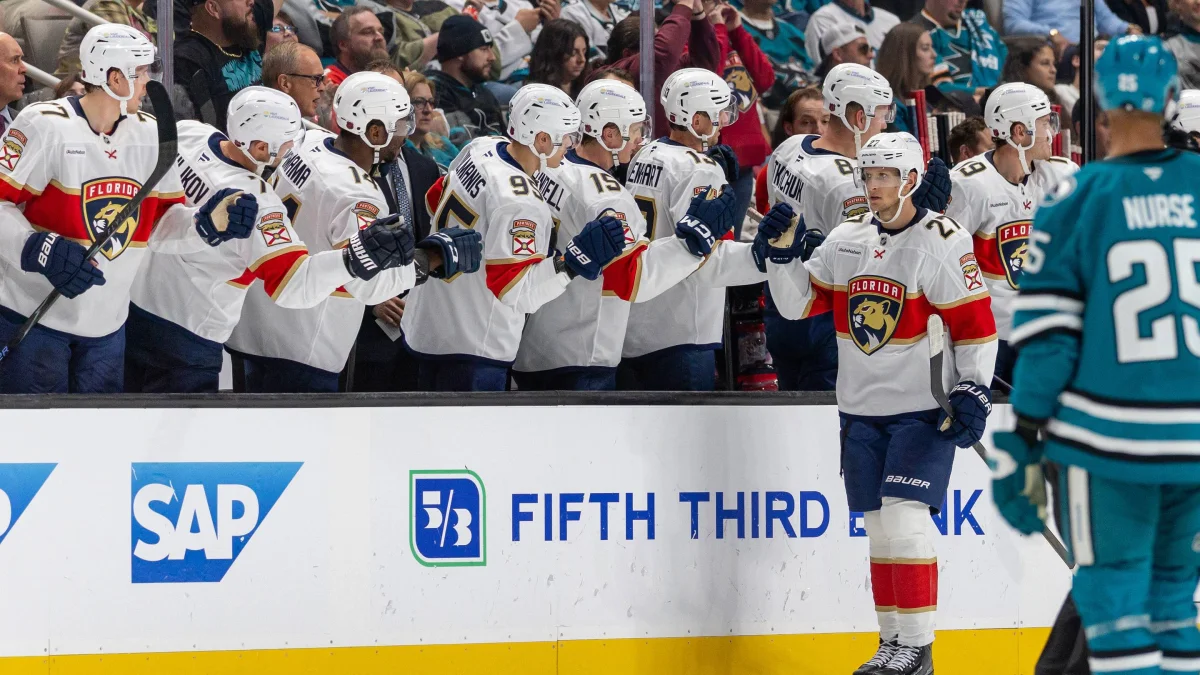
Vamos Gatos Night is a fun evening, and the Panthers know how to stage one. On October 15, 2026, they host the Vancouver Canucks at Amerant Bank Arena with special jerseys, community honors and a ticket package built around Hispanic fans. My read is that the celebration is the easy part. The harder question is whether that night turns into a real path onto the ice for families who have never laced up a pair of skates.
Why the calendar fits
Hispanic Heritage Month runs from September 15 to October 15 and recognizes the histories, cultures and contributions of Hispanic Americans. The window isn't arbitrary. September 15 marks the independence anniversaries of Costa Rica, El Salvador, Guatemala, Honduras and Nicaragua, while Mexico and Chile celebrate on September 16 and 18. Ending the observance on October 15 gives a team a full month to build around, which is why one home game can feel like a finale rather than a stand-alone event.
The league has been part of this for a while. The NHL and NHLPA announced a joint Hispanic Heritage Month celebration in September 2021 through the Hockey Is For Everyone program. Five years on, the question is no longer whether the league should acknowledge Hispanic fans. It's what that acknowledgment produces at the grassroots level.
Florida's numbers make the case
Nearly three in ten Florida residents identify as Hispanic or Latino. U.S. Census Bureau QuickFacts puts the share at 29.2 percent, or roughly 6.9 million people, based on the state's 2025 population estimate. For a franchise based in that state, outreach to this community isn't a side project. It's part of building the fan base. Teams in diverse markets usually find that the fans who stick around are the ones who see themselves in the programming, the community partners and the names on the back of the jersey.
The ticket package and limited-edition merchandise are a fair start, and the Panthers plan to spotlight Hispanic residents whose work makes a difference in the community during the night. That recognition matters. It still leaves the hockey itself out of the frame, and that's where the club's history comes in.
The Panthers already have Hispanic hockey history
Al Montoya became the first Cuban American to play in the NHL, and he spent two seasons with Florida from 2014 to 2016. He appeared in 45 regular-season games and posted an 18-14-5 record. In 2015-16 he backed up Roberto Luongo and finished with a 2.18 goals-against average and a .919 save percentage.
Scott Gomez played for Florida in 2013-14, scoring two goals and adding 10 assists in 46 games. His father has Mexican roots and his mother comes from Colombia. Auston Matthews of the Toronto Maple Leafs and Team USA also belongs in the league's Hispanic heritage conversation. For Panthers supporters, though, Montoya and Gomez make that history local. They played in this building's orbit, and their stories are tied to the franchise.
The LATAM Cup puts participation first
The Panthers' support for the Amerigol LATAM Cup goes well past a game night. The 2026 tournament ran in August at Panthers IceDen in Coral Springs and at Palm Beach Skate Zone in Wellington, with players competing while representing their countries or family heritage. The field drew participants from Latin America, the Caribbean, Algeria, Armenia, Greece, Israel, Lebanon and Pakistan, which shows how far the idea of heritage hockey can stretch.
The most telling detail is the coaching. NHL.com's William Douglas reported that Team Cuba president Arnold Cuervo reached out to Montoya through social media. Cuervo remembered Montoya's popularity within South Florida's Cuban community and invited him to lead the U-12 Cuban American team, and Montoya has returned to South Florida as a coach. Children compete, a former Panthers goalie coaches them, and the club helps make the opportunity possible.
The Panthers also announced a $20,000 foundation contribution to the tournament, and the NHL and NHLPA supported the LATAM Cup through the Industry Growth Fund. The Hispanic Excellence program follows the same pattern. These are concrete commitments, and they deserve credit. They also show where the club's resources go when it wants to build something rather than just mark a date.
Where the gap still shows
A jersey and a chant don't teach anyone the offside rule. Fernando Abarca, a Salvadoran sports journalist, made that point on the Hockey on the Beach podcast ahead of the San Jose Sharks' home opener against the Panthers. "We're more than just a jersey," he said. He called for greater access to youth hockey and more outreach to Latin American communities, adding, "I feel the NHL has to do a little more."
The obstacles he points to are easy to picture. Soccer has a much deeper tradition than ice hockey across many Latin American countries, so families who didn't grow up around the sport may need an introduction to the rules before they become regular viewers. Playing adds a second hurdle, because equipment, skating and ice time all cost money. Here's the thing: a free clinic that ends with a bill for gear and rink time can leave a child on the boards instead of on the ice.
Jerseys and recognition matter, but access, affordability and chances to keep playing decide whether the relationship grows. That's a heavy load for one club to carry, and the league should introduce and back this work across its markets rather than leave it to Florida alone.
What a better version looks like
Vamos Gatos has become a familiar chant around the league, but a catchy phrase doesn't automatically give a newcomer a way into the game. Years into the NHL's heritage celebrations, education and practical information should sit at the center of the experience. My read is that three things would move the needle: helping fans understand what they're watching, sharing Hispanic hockey stories beyond a single night, and making affordable entry points easy to find. When a child tries hockey at a free event, the family should know realistically what continued participation will cost.
A stronger version of this night would leave a new fan knowing more than two words. It would help that person understand the game, follow the team and find a realistic way to play after October 15. That's the test to watch when the Canucks visit Amerant Bank Arena, and the test to watch for the LATAM Cup's next edition.