Iron Mike's Florida Chapter and the Luongo Deal That Never Happened
- Cargo
- NHL Games & Standings
- Shipped
- Shipper
- Daria Mironova
- Readers
- 903
Long before back-to-back Cups, Mike Keenan and Mike Pelino lived through a turbulent Florida chapter. Pelino's 15 games still shape how he sees the team.
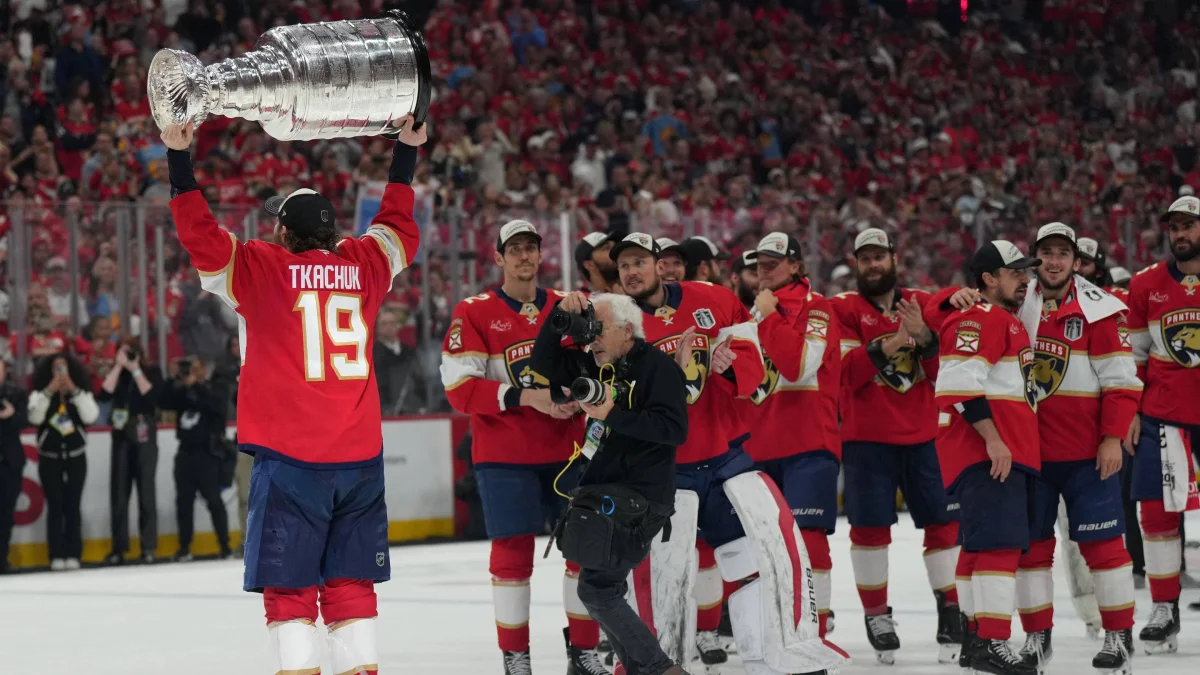
Florida's recent championships sit on top of a long stretch of coaching churn that most fans only half remember. Two names near the center of it are Mike Keenan, nicknamed "Iron Mike" for demanding and often controversial methods, and Mike Pelino, whose first NHL coaching job lasted just 15 games. Their brief overlap shows how fragile those early years were, and how much of the franchise's direction came down to money.
Keenan's first stint and the Bure departure
Keenan took over in 2001-02, when Florida was still trying to find its footing after reaching the Stanley Cup Final in 1996. His tenure included the trade of Pavel Bure to the New York Rangers in 2002. Keenan later explained that the organization's financial situation and ownership's decision to reduce payroll drove that move.
That's the pattern teams in a cost-cutting phase tend to follow. The roster becomes a budget exercise before it becomes a hockey exercise, and the coach ends up managing decisions he didn't fully choose. It's a useful lens for the years that followed, because many of Florida's biggest moves in this period came back to salary.
Hiring Pelino and a quick firing
In the summer of 2003, Keenan brought in Pelino, who had spent four seasons as coach and manager of Canada's national men's team. The two had worked together before Florida, including with Canada at the 1991 Canada Cup. Speaking to Match TV, Pelino recalled Keenan calling him personally to offer an assistant's job. He accepted immediately, excited for his first chance behind an NHL bench.
That excitement didn't last long. Florida fired Keenan in early November 2003, and Pelino lost his job the following day. "Because Mike had brought me in, and the mentality at that time was, well, we better clean house. I got fired the next day," Pelino said. It's a blunt description of how a front office reacts after a coaching change: the people tied to the old regime get cleared out fast.
The reshuffle and Keenan's return
Florida kept rotating its bench after Keenan left. General manager Rick Dudley stepped behind it temporarily before John Torchetti took over in February 2004. Then, in May 2004, the Panthers brought Keenan back as general manager and hired Jacques Martin as head coach.
During that second stint, Keenan explored a trade that could have reshaped the franchise. Speaking on Sportsnet 590 The Fan, he confirmed a proposed one-for-one deal that would have sent goaltender Roberto Luongo to the Boston Bruins in exchange for Joe Thornton. According to that discussion, ownership rejected the proposal because of the salary involved.
The deal never happened, and the reasoning is the more revealing part. Goaltending sets a franchise's ceiling, and swapping a netminder for a center of Thornton's profile would have rewritten who Florida built around. Ownership's decision shows that salary, as much as talent, shaped those choices. Florida instead sent Luongo to the Vancouver Canucks in June 2006, in a package that brought Todd Bertuzzi, Bryan Allen and Alex Auld to the Panthers. Keenan resigned as general manager in September 2006.
A different hockey town
Pelino's perspective on the early days is the most useful counterweight to the coaching carousel. He remembers a franchise that was, in his words, "just a young team still." He also found that established NHL organizations were well ahead of Florida in logistics, staffing and services for players and their families.
His view of South Florida's hockey culture is just as telling. While living in Coral Springs, Pelino helped coach his seven-year-old son's youth hockey team. "There weren't very many youth hockey players," he recalled. Today he sees more arenas, a larger hockey community and a much stronger culture across the region. He credits the Panthers with building much of that and with making hockey more competitive with football, basketball and baseball. He also attended a Panthers game during one of the Stanley Cup-winning seasons, and the atmosphere, fan experience and attention to detail impressed him. "There was nothing like that when I was there my first time around," he said.
A friendship that outlasted Florida
Although Pelino spent only 15 games with the Panthers, his relationship with Keenan continued well after both left Florida. The two reunited in Russia with Metallurg Magnitogorsk of the Kontinental Hockey League, and in 2014 they helped the club win the Gagarin Cup. Pelino later won another Gagarin Cup with Metallurg in 2016, and a third with Lokomotiv.
Pelino told Match TV he still speaks with Keenan almost every day or every few days. He recently attended Keenan's induction into the Ontario Sports Hall of Fame. The Florida years also gave Pelino another lasting connection: former Panthers forward Viktor Kozlov, with whom he later reunited as a coach in Magnitogorsk. "It's really nice to see the progress that the Panthers organization has made," Pelino said.
Why the short chapters still count
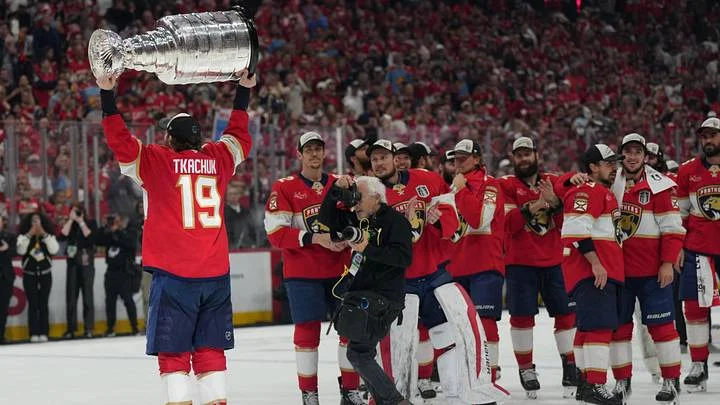
The gap between Florida's 2024 and 2025 championships under Paul Maurice and the years Keenan and Pelino experienced is enormous. The current organization has a deep bench of staff, a fan base that fills the building and a championship résumé that is hard to argue with.
Still, Florida's history runs deeper than its recent celebrations. Some coaching chapters lasted years. Others, like Pelino's, lasted only 15 games. My read is that the short ones tell you as much about a franchise's decision-making as the long ones do. If you want to see how far the Panthers have come, start with the salary-driven choices of the early 2000s, then watch how differently the organization handles its people today.