Ron Holland's Rotation Spot Deserves a Hard Look in Detroit
- Cargo
- NHL Games & Standings
- Shipped
- Shipper
- Cem Yolbulan
- Readers
- 831
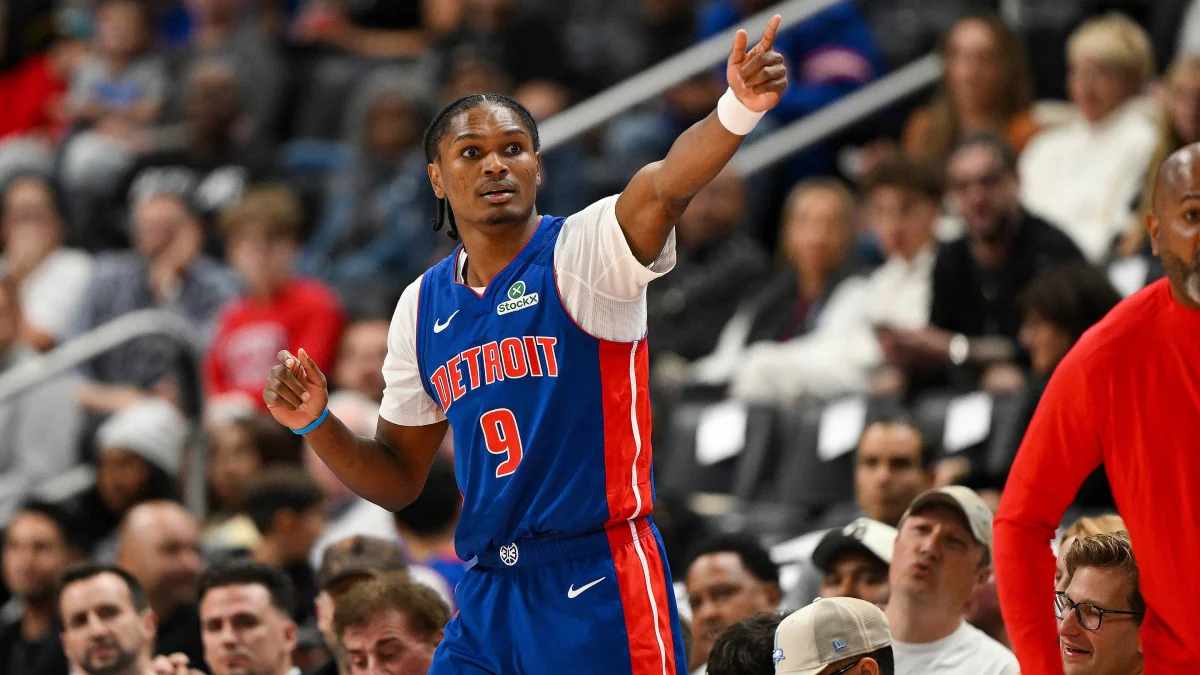
The Pistons moved to 4-1 with a win over Charlotte, but Ron Holland's 6-of-21 shooting and 0-for-6 from three make his minutes hard to defend.
The Pistons got the result they needed Wednesday, bouncing back from their first loss of the season to beat the Charlotte Hornets at home. They were on the second night of a back-to-back and fell behind early, but they took control after halftime and moved to 4-1. Most teams would take that and move on. My read is that Detroit should look closer, because the win covered up a few too many weak individual performances, and Ron Holland's was the one that stood out most.
A win that didn't look convincing
The Pistons got the two points, but the game didn't look like the work of a team with real ambitions. Offense was the main issue. Detroit had to dig out of an early hole, and the individual numbers from several rotation players didn't match the scoreboard. That's the kind of game that feels fine on Wednesday and gets expensive over a long season, especially when the margin for error in the standings is so thin this early.
Eight minutes, four turnovers
Holland played eight minutes in the first half, and he made the most of very few of them, and not in a good way. In that stretch he committed four turnovers, fouled Brandon Miller on a three-point attempt from about 40 feet, and airballed a wide-open three. He also made several poor decisions on drives that didn't lead anywhere and ended in passes that never should have been thrown. Any one of those can happen to a young wing. All of them in one half is a pattern.
Confidence is the real problem
Here's the thing: the mechanics aren't the whole story. Holland tends to get in his head, and the mistakes follow from that. By the end of his stint, he was barely looking at the rim. Every time he touched the ball, his eyes went to Cade Cunningham or Daniss Jenkins, looking for someone to dump it off to. That's what a player does when he doesn't trust his next read. Players in this spot often start giving the ball away before they've decided what to do with it, and each turnover makes the next decision harder. The cycle feeds itself.
Spacing and matchups
The trickle-down effects are real. Holland simply isn't getting guarded out there. Charlotte put center Ryan Kalkbrenner on him, and Kalkbrenner planted himself near the rim whenever Holland was on the floor, which clogged the lane for everyone else. A defender sitting in the paint takes away the driving lanes Holland was trying to find, and it makes every possession look more crowded than it should be.
That's also the context for why Bickerstaff has kept Holland away from Ausar Thompson on the floor together. With both on the court, the spacing problems Holland creates would be very hard to overcome. Coaches usually find ways around one awkward fit, but two stacked on each other tends to break a lineup, so keeping them apart is a sensible response to the problem rather than a sign of giving up on either player.
The numbers don't help the argument
Holland is shooting 6-of-21 from the field and 0-for-6 from three-point range this season, and he's averaging less than three points per game. Those are the kinds of numbers that make a rotation spot difficult to justify, especially when a coach has other options. A young player can absorb a rough start if he's contributing somewhere else, like on the defensive end or on the glass. The point here is that Holland's defensive intensity isn't the thing Detroit is missing right now.
Who else is available
Detroit has one of the deeper rosters in the league, which makes Holland's minutes look more like a choice than a necessity. The question is whether Ebuka Okorie is ready to contribute, and whether Taurean Prince or the veterans off the bench could soak up those minutes without a noticeable drop in production. Those are fair questions to ask, and I'd expect the answers to matter more to Bickerstaff than any single game.
The Pistons may not want to give up on Holland yet, and that's a reasonable instinct for a third-year player. But a team with title aspirations can't keep handing out developmental minutes just because the player is young. Unless Holland starts looking like a rotation player on a good team, the Pistons should cut back on his regular minutes and let the rest of the bench earn them. The next few games will show whether that shift is coming, and the minutes split is the number I'll be watching most closely.