Rangers' Center Gap Puts Young Trade Options Like Norris and Sillinger in Play
- Cargo
- NHL Games & Standings
- Shipped
- Shipper
- Brandon Cohen
- Readers
- 795
The Rangers' need at center is clear, and Josh Norris and Cole Sillinger are the young names worth watching, though neither move is close to reality.
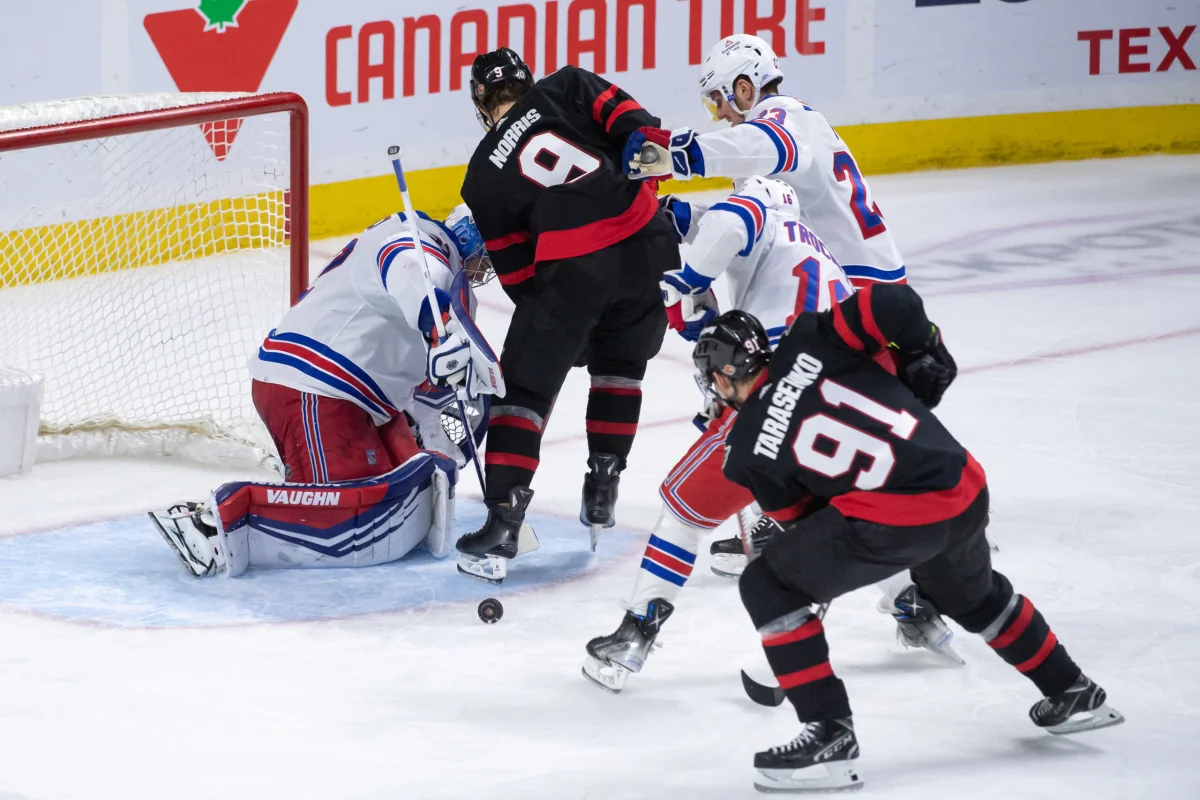
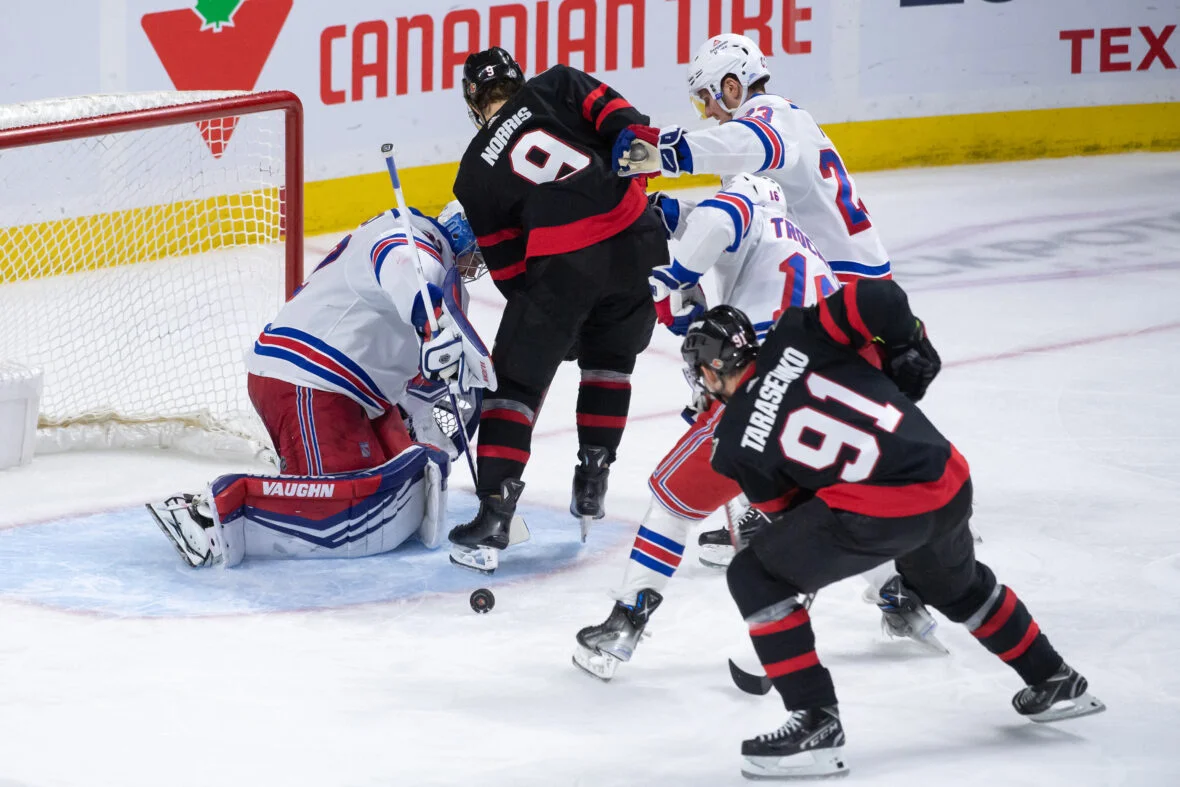
The Rangers are rebuilding on the fly, and the young talent and the veterans who have rediscovered their games are a big part of why. The hole in the middle of the lineup hasn't closed, though. Will Cuylle is playing center, and he's a patch on a bigger problem. Noah Laba has struggled to produce consistently, so the search for a center who can help now is real, even if no specific target has been confirmed.
A need that was there before the season started
This one was predictable. New York went into the season without a true third-line center, and the team's depth chart reflected that from the first shift. Joe Veleno's injury made the thin spot thinner, but here's the thing: even a healthy Veleno probably wasn't going to solve a top-nine problem. He's more of a depth piece than a foundation.
The bigger issue is what happens when the plan has no backup. Chris Drury's front office has built a lot of its roster around flexibility and hope, and a contingency plan at center has been hard to find. The Blueshirts didn't make a center move in the offseason, which means the need is more pressing now than it was in the summer, when the market had more options.
Cuylle's case is real, but it's still a patch
There's a version of this story where Cuylle grows into the position and becomes a long-term answer. It has precedent. Pavel Buchnevich was a winger in New York before he played center for a stretch in St. Louis, and the move worked for him in a different context. Cuylle has the size and the willingness to go to the dirty areas, so it's not a fantasy.
My read is that it's still unlikely to be the full solution. A winger playing center can fill a gap for a while, but top-six production usually needs a natural middle-of-the-ice player who can win draws and read the play without thinking about it. Until Cuylle shows that, the Rangers should be building a second option.
Who the Rangers could target
Mason McTavish is the name that stings. He was on the radar as a potential fit, a young center who could slot in as a 3C and grow toward 2C, and he ended up in St. Louis instead. That profile is the one New York should be chasing: a young center who might see a jump with a change of scenery, or a dependable veteran who isn't yet at the age where the decline starts to show. The second option is more realistic in some ways, because veterans on expiring or awkward fits are easier to move than players on the rise.
The guiding principle has to be not giving away future assets for a short-term fix. That limits what the Rangers can do, and it's the reason some of the more obvious names don't make sense. Braden Schneider, for example, is on a $5.5 million salary and is in line for a bigger raise, and his recent results haven't helped his case. He still carries a good reputation around the league, which is the kind of thing that matters in a trade conversation even if it doesn't show up on the scoresheet.
Ryan Hartman
Hartman is a solid top-nine center, and he's on an expiring deal, which is both the appeal and the complication. He's 32, so any acquisition would be a short-term rental. If Minnesota can make a Dylan Larkin trade work, the Wild may look to move Hartman in the same stretch. That's speculation, not a confirmed plan. If the Rangers could get Hartman for a modest price, he'd give them a dependable middle option without a long commitment. That's the right size of deal for a team that wants to stay flexible.
Hartman isn't young, so he doesn't fit the brief literally. But if New York is outperforming expectations and the cost is right, he's a sensible addition.
Josh Norris
Norris is the most interesting name on this list, and also the riskiest. He used to be a real scorer, and the Sabres' version of him has been a different player. He's been pushed down to the third line in Buffalo and has two goals and an assist this season, and his role has shifted in a way that has displaced Ryan McLeod from his usual spot on the wing. Whether that reflects a poor fit or simply a lower level of play is hard to know from the outside.
The concern is the contract. Norris has three more years at $7.95 million, and he hasn't yet played a full season in his career. That's a lot of money attached to a player with a durability question. Any Rangers conversation would have to account for both the on-ice upside and the cap commitment, and a change of scenery would have to make a real difference for that math to work.
Cole Sillinger
Columbus is unlikely to move Sillinger, especially now that his move to wing seems to have steadied his game. Still, he's the kind of player who fits the brief. He's young, he has a strong draft pedigree, and he may simply need a different environment to grow. The wild card is Zach Werenski and how Columbus handles its defensive situation, since a trade request from him would change the Blue Jackets' priorities quickly.
The obstacle is that Columbus' need is on offense, not defense, so a Sillinger deal would have to be framed around what the Blue Jackets are trying to fix. That makes him more of a pipe dream than a plan. Still, he's one of the more intriguing young centers out there, and his name isn't being talked about much yet.
What to watch next
The Rangers' center question won't resolve itself with another month of Cuylle and hope. The useful signals to track are whether Cuylle keeps producing at center, whether Laba finds his footing, and whether Minnesota's Larkin situation opens a door for Hartman. For Norris and Sillinger, the question is whether their teams decide to move them at all. None of these are done deals, but the Rangers have to be ready if one of them becomes available.