Pistons' John Collins Is Struggling to Justify His Offseason Deal
- Cargo
- NHL Games & Standings
- Shipped
- Shipper
- Cem Yolbulan
- Readers
- 318
John Collins has the worst on/off numbers in Detroit's rotation, and his $51 million deal is becoming the offseason's biggest question mark.
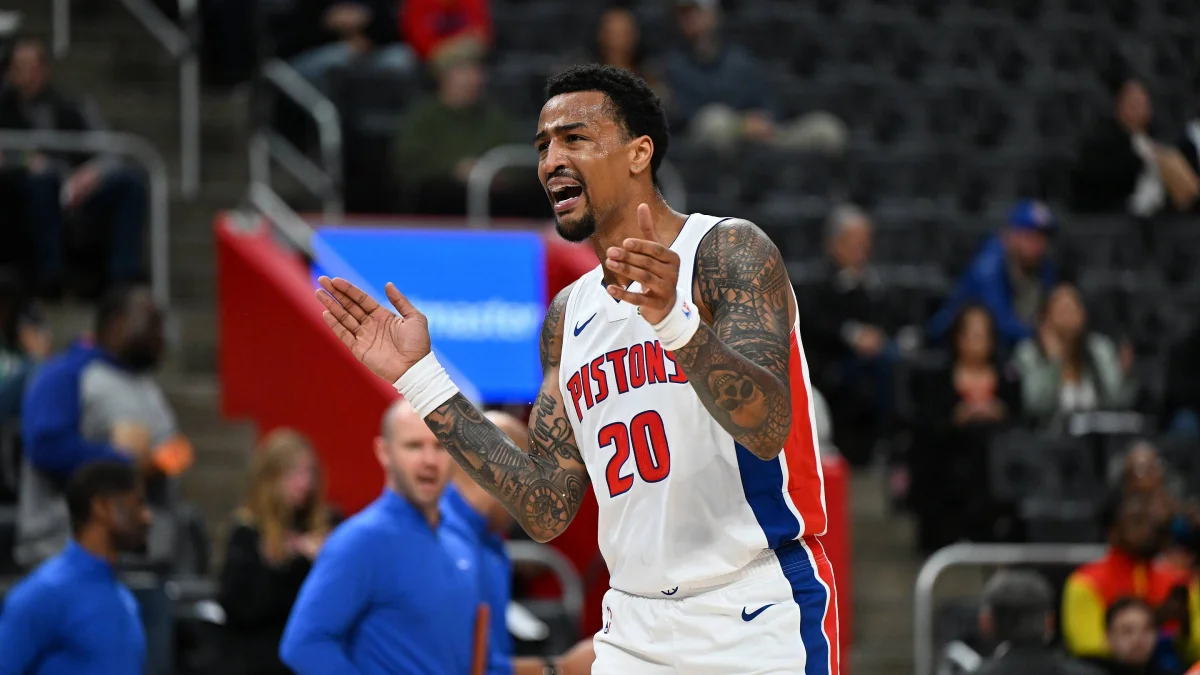
The Pistons are winning, and their defense is among the best in the league. The problem is that the most significant offseason addition sits right at the center of the team's early struggles. John Collins hasn't looked like the starter Detroit paid for, and the numbers make that hard to argue with.
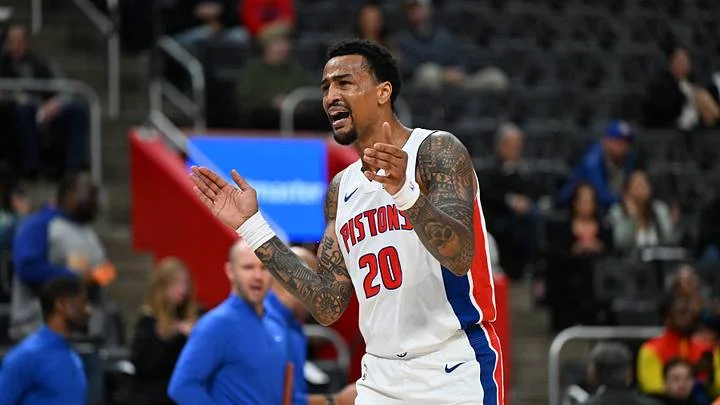
A three-year deal that isn't paying off yet
Detroit gave the 29-year-old power forward a three-year, $51 million contract to become the starter, and in the process let Tobias Harris walk. Harris has since signed with the San Antonio Spurs, but he hasn't made his season debut yet because of a calf injury. He will return eventually, and that's the uncomfortable part for Detroit. It's hard to picture Harris playing worse than Collins has been playing for the Pistons.
That's not a verdict on whether re-signing Harris would have been the smarter path. It's a narrower point. The Pistons made Collins their answer at the position, and so far that answer has created more questions than it has solved.
The last four games tell a rough story
Collins was the weakest link in Detroit's win over the Hornets on Monday night, and that performance fits a broader slide. Over Detroit's last four games, he averaged 3.5 points on 27.3% shooting from the field in 22.5 minutes per game. He committed more turnovers than assists and went 0-for-6 from three-point range. The Pistons were outscored by four during his minutes in that stretch, even though the team carried a +43 point differential across those same four games.
Context matters here. A night like Monday can be a blip, and a four-game sample is short. But when a player's line is this lopsided across a full week, it stops looking like bad luck and starts looking like a role that isn't fitting.
Efficiency and role
This is by far the least efficient stretch of Collins' career, and his season-long numbers don't rescue it. He has a 48.2% true shooting percentage this season, and he rarely gets to the free-throw line. He's averaging less than one assist per game, and his usage rate is at a career low. That combination is worth watching. A power forward who isn't drawing fouls, isn't creating for teammates and isn't taking a bigger share of the offense has to contribute somewhere else, and right now it's not clear where that is.
Collins has been fine defensively in the sense that he hasn't been a liability on a single possession basis. But he isn't the reason Detroit's defense is elite, and that's the bigger concern when the Pistons are paying a starter's price.
What the on/off numbers say
The team-level data points in the same direction. According to Cleaning the Glass, Detroit allows 4.9 more points per 100 possessions defensively with Collins on the floor than when he sits. Among the team's rotation players, he has the worst on/off rating. With him on the court, the Pistons post a +3.8 net rating. Without him, that jumps to +23.5, a figure that would put Detroit's offense and defense at the top of the league by a wide margin.
On/off splits are noisy over a small sample, and it's normal for a new addition to take time to fit into a well-organized system. Still, a gap that large deserves more than a shrug. Teams in this spot often work through minutes distribution and lineup combinations first, but when the on/off gap persists beyond the early weeks, coaches tend to start asking harder questions about the rotation.
Were there better options?
This is where the offseason decision gets harder to defend. Collins and Harris weren't the only power forwards available. Dean Wade, Rui Hachimura and Jonathan Kuminga were all within Detroit's price range, and each signed less lucrative deals than Collins. The Pistons added Collins believing he was a clear upgrade over Harris or the other free agents on the market, and the early evidence doesn't back that up.
The good news for Detroit is that the path to a fix remains open. The Pistons have the assets and the matching salary to pursue a trade for a power forward, much as they did when they acquired Isaiah Joe. Whether they consider using those pieces to replace Collins at the trade deadline is an open question, and nothing in the team's public messaging has settled it.
What to watch next
My read is that the Pistons shouldn't rush to judgment after a handful of games, but they also can't afford to wait too long. Detroit is good enough right now that every rotation decision carries weight in the East. Watch Collins' minutes, whether his usage recovers toward his previous levels, and whether the on/off gap narrows as the sample grows. If it doesn't, the trade deadline will become the place where this offseason gets its real answer.