Matthew Schaefer's Five-Game Start: Heavy Minutes, Big Possession Numbers, No Goal Yet
- Cargo
- NHL Games & Standings
- Shipped
- Shipper
- Nestor Quixtan
- Readers
- 673
Five games in, Matthew Schaefer is logging the most ice time on the Islanders and driving possession, even without a goal. Here's what the numbers show.
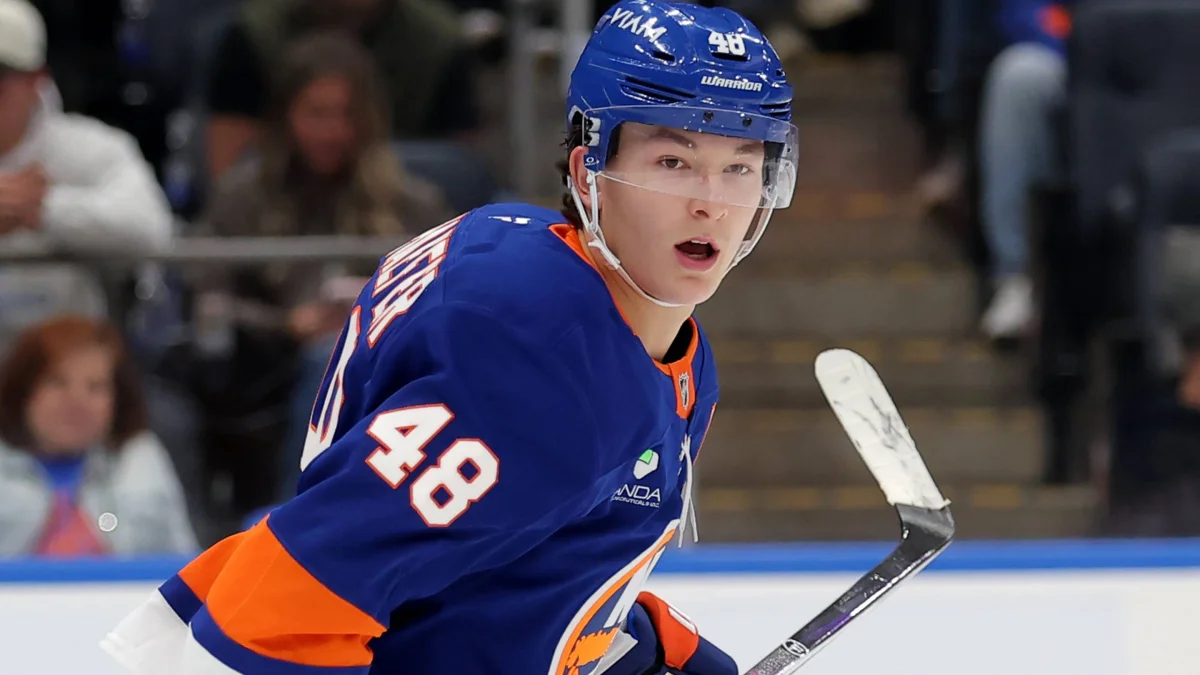
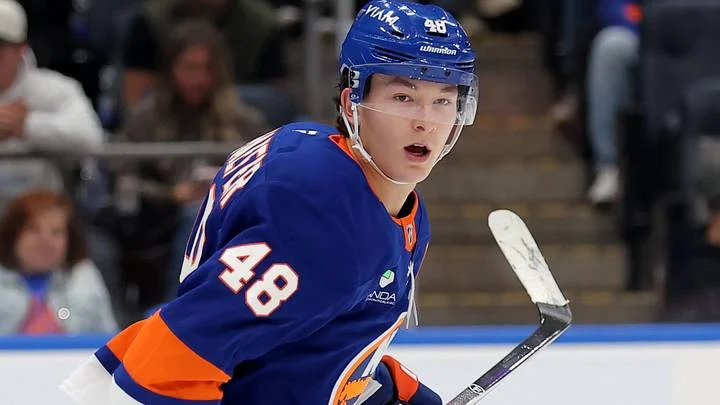
Five games is a tiny sample, and nobody should be engraving anything in mid-October. But five games is enough to see how a coaching staff feels about a player, and the Islanders are showing their hand. The 19-year-old hasn't scored yet, and honestly, that's the least interesting thing about his start.
The Workload Is Serious
Start with the ice time, because it's a little ridiculous. Schaefer is averaging 25:27 a night, and Adam Pelech, the next-busiest Islanders defenseman, sits at 20:36. That's a gap of almost five minutes, which in hockey terms is a canyon. Teams don't usually hand a teenage blueliner that kind of role this early, and it tells you where the coaches see him fitting.
The split by situation makes the message clearer. Schaefer has logged 106:28 at even strength, 20:01 on the power play and 0:45 shorthanded. He quarterbacks the man advantage and is the top option at five-on-five. The penalty kill is the one job he's being spared, and that's the right call. Pelech, Ryan Pulock and Logan Stanley can handle those minutes. There's little reason to burn a teenager's legs blocking shots when he's the best puck mover on the roster.
The Islanders Play Differently With Him On The Ice
This is where the start moves from "promising" to "eye-opening." At 5-on-5, the Islanders have 96 shot attempts for and 75 against with Schaefer on the ice, a plus-21 differential. The next-best mark on the team belongs to Ondrej Palat at plus-7. That's not a close race.
His shot attempt share is 56.1 percent, the best on the roster, and his relative number sits at 15.9 percent. Put simply, the Islanders tilt the ice when he's out there and get tilted when he sits. The NHL's own stats page also shows New York scoring 66.6 percent of its 5-on-5 goals during his shifts. Those are the kinds of numbers that tend to hold up better than a single hot game.
He's Not Getting Easy Minutes
Here's the part that deserves more attention. Only 17.7 percent of his 5-on-5 shifts start in the offensive zone, while 41.8 percent start in his own end. That's the reverse of how most teams treat a young offensive defenseman, who usually gets the sheltered draws. Schaefer is getting the hard ones and still pushing play up the ice.
The score effects are interesting too. When the game is tied, his shot share jumps to 70.9 percent. It stays above 50 when the Islanders are trailing, and it dips to 42.5 percent with a lead. That drop looks more like a team habit of sitting back with a lead than something you can pin on one defenseman. Here's the thing: a player who can drive the play when the game is level and hold his own when the team is chasing is exactly the profile coaches want from a top pair.
No Goals? Give It Time
Four assists and zero goals looks quiet on paper. It isn't. Schaefer leads the team with 19 shots on goal, while Bo Horvat has four goals on 17 shots. Schaefer is putting more pucks on net and has nothing to show for it yet.
His individual shot attempt rate at 5-on-5 is 15.62 per 60 minutes, a number that would look normal on a winger. A defenseman who fires that often and starts most shifts in his own zone is going to score eventually. The zero is bad luck, and bad luck tends to run out.
Where The Points Are Coming From
- Two even-strength assists, one primary and one secondary
- Two power-play assists, both primary
- 0.80 points per game
- 6.00 power-play points per 60 minutes
The Islanders have four power-play goals with him on the ice, and he directly set up two of them. Horvat has three of those goals. That pairing already looks like the engine of the top unit, and there's room for it to get better as the two get more reps together.
Why The Box Score Undersells Him
Goals and assists tell maybe half the story. Shot volume, ice time and power-play role are what serious followers look at when they size up a defenseman, whether the conversation is about award races or points totals. A line of 0-4-4 sounds fine. A line of 0-4-4 with 19 shots, 25 minutes a night and a 56 percent shot share sounds like a player about to break out. The second description is the accurate one.
The Concerns Are Real, Too
Time for the cold water. Schaefer has nine giveaways in five games, or 4.24 per 60 minutes, the most among Islanders defensemen so far. That's too many.
There's a fair explanation, though. The puck is on his stick more than anyone else's, and players who carry it that much will cough it up sometimes. He also has seven takeaways, which is a lot for a blueliner. The giveaways are the cost of a player who creates offense. A safer, quieter version of him would turn it over less and help the team far less. The coaches appear to have made that trade, and the turnovers are the part that will need work over time. He's also contributed two hits and four blocks, a light physical footprint that fits a player who defends with his stick and feet rather than his body.
The Scoreboard Hasn't Caught Up
For all the territorial dominance, the Islanders are dead even in goals at even strength with him on the ice, five for and five against. His plus-minus sits at zero. His on-ice shooting percentage at 5-on-5 is 9.3, so nothing unusual is inflating or deflating his numbers. If the Islanders keep outshooting opponents by this much during his shifts, the goals should follow.
The Short Version
- Usage: 25:27 per game, tops on the team by a wide margin
- Possession: 56.1 percent shot share, plus-21 at 5-on-5
- Deployment: more than twice as many defensive-zone starts as offensive-zone starts
- Offense: team-high 19 shots, four assists, still waiting on goal number one
- Concern: nine giveaways
What Comes Next
Some of this will cool off. A 15.9 percent relative shot share won't hold across an 82-game season, and it would be unrealistic to expect it to. The workload is a different story. It reflects a choice by the coaching staff, and nothing in the early numbers gives them a reason to change it. Watch the giveaway count and the power-play connection with Horvat over the next few weeks. Those will tell you whether the Islanders are simply leaning on a talented teenager or building their top unit around him.
Two weeks in, the Islanders are treating a teenager like a true number-one defenseman, and he's playing like one. The first goal is coming. At 19 shots in five games, it might already be overdue.