Islanders' Recalls Look Routine, but the Cap Math Tells a Bigger Story
- Cargo
- NHL Games & Standings
- Shipped
- Shipper
- Samuel Brunola
- Readers
- 894
Engvall and Aitcheson filled a roster spot, but keeping Barzal and Romanov off long-term IR may be the bigger move for cap flexibility.
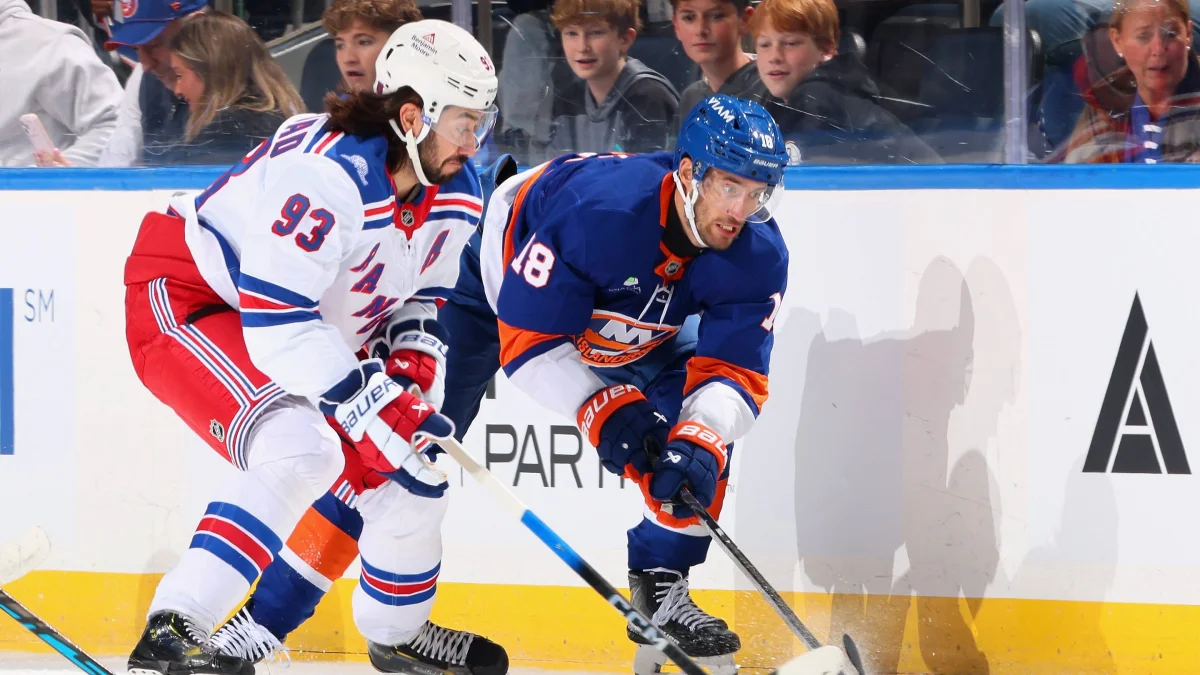
On the surface, the Islanders' latest moves look like paperwork. Pierre Engvall and Kashawn Aitcheson came up to fill out the 23-man NHL roster, and Cal Ritchie and Matias Maccelli went on injured reserve. But my read is that the cap accounting behind those moves matters more than the roster slots themselves.
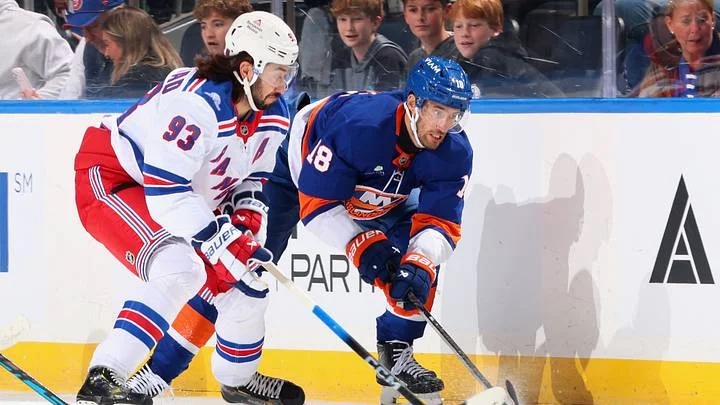
What the recalls actually did
The Islanders moved forward Pierre Engvall and defenseman Kashawn Aitcheson to the NHL to reach the 23-man roster that league rules require. Engvall's case is the simpler one. He's on an NHL one-way contract, so sending him back to the AHL isn't a free option, and the club gets a veteran forward who is already under contract at the NHL level. His $3 million cap hit goes straight onto the books the moment he's in the lineup.
Aitcheson is the more interesting addition. A depth defenseman with incentive bonuses in his deal, he doesn't carry the same clean, fixed number, and his bonuses count against the ceiling as well. Teams don't typically pick up a player like that just to stay at 23. The bigger question is whether he's a short-term body or the start of something longer.
Meanwhile, forwards Cal Ritchie and Matias Maccelli were placed on IR, retroactive to the October 17 game against the Toronto Maple Leafs, when they were originally hurt. Both are expected to miss several weeks while they recover. Retroactive placement is a standard way to keep the roster accurate without losing the player's status, and it's the detail that makes the timeline make sense.
Why the cap math matters more than the roster count
Here's the thing about the NHL salary cap: the number that counts is the one on the books, and a club's room to maneuver depends on how much of that number is tied up in players who aren't contributing right now. Once you understand that, the Islanders' choices start to look deliberate.
Teams in this position often add a player to satisfy the roster minimum, then hold extra cap room in reserve for a trade or a later signing. The more salary already committed, the less space a general manager has when a deal comes up. So the recalls are cheap to make, but they also reduce what Darche can work with later. That's the real reason to keep an eye on the sheet, not just the lineup card.
And yet the tradeoff isn't free. Every dollar of cap space held open is a dollar not spent on a player who might help this season, so the club has to decide whether that flexibility is worth the depth it leaves on the ice.
Keeping Barzal and Romanov off long-term IR
This is where the strategy gets more interesting. Matthew Barzal and Alexander Romanov are both injured, but the Islanders have not moved them to long-term injured reserve. Placing a player on LTIR can free up cap space, and the club hasn't taken that route here. Keeping both players on the regular injury list means their salaries still count, which limits how much room the team actually gains.
That makes the recall of Engvall and Aitcheson look less like a simple roster fill. The club may be keeping its options open: stay under the roster requirement, avoid committing further, and preserve the ability to act if a deadline opportunity appears. My read is that the front office is building flexibility rather than spending it, and that's a deliberate choice worth noting.
DeBoer's defense question
The on-ice picture explains some of the urgency. Coach Peter DeBoer said at practice, ahead of the Nashville game, that every defense pairing was up in the air after a weak 6-3 loss to the Dallas Stars. The coach's frustration was clear. "Everything is on the table," DeBoer said, adding that it was the first time in five or six games the team hadn't picked up points, so he planned to look at everything lineup-based for the next night.
That's a coach looking for answers, not a coach ready to overhaul the group. Matthew Kessel has been playing fairly well, and Scott Mayfield hasn't been part of DeBoer's plans, which tells you where the club's depth stands. If the pairings keep shifting and the results don't improve, a depth defenseman becomes a more realistic option.
The Islanders are only 11 games into the season, so it's early to read too much into one loss or one rough stretch. Still, a team that wants to contend typically needs its top four to hold up, and right now that group hasn't fully settled.
What to watch next
Three things will tell us whether these moves were routine or the start of something bigger. First, the standings by the new year: a club within reach of a playoff spot is more likely to spend cap room on help. Second, whether Barzal and Romanov move to long-term IR, which would change the cap picture quickly. Third, what Darche is willing to give up for a top-six defenseman. Only time will tell whether DeBoer can turn this group into a real playoff contender, or whether the cap space ends up being saved for the future.